

The #1 most common reason that people fall behind on their fitness goals and taking care of themselves is that they get 'too busy'.
The #1 most common reason that people fall behind on their fitness goals and taking care of themselves is that they get 'too busy'.
An AI powered health insights application that puts all your health data in one place. Users get more insightful data, and less hassle.
An AI powered health insights application that puts all your health data in one place. Users get more insightful data, and less hassle.
An AI powered health insights application that puts all your health data in one place. Users get more insightful data, and less hassle.
FusionHealth.ai
FusionHealth.ai
The Research
The Research
The Research
The Problem
The Problem
To gain deeper insights into the app’s effectiveness, I conducted interviews with 9 users representing slightly different target demographics. I began by crafting a detailed interview plan that focused on the app’s existing features and proposed functionality. The interviews started with understanding how each user interacts with similar products and their perspectives on health and wellness. I found that they:
Would workout more if they could in shorter sprints
Had trouble sticking to their goals with busy schedules
Encountered difficulty in managing their time between multiple calendars, work, and family time
Next, I introduced them to the app’s current designs to see if it helped them accomplish their goals. These conversations were invaluable for identifying pain points, validating design decisions, and uncovering opportunities. This provided insights on the app:
Needs comprehensive onboarding to understand full scope
Goals should be based on their current capability
Insights on how their habits affect their goal progress and energy levels
To gain deeper insights into the app’s effectiveness, I conducted interviews with 9 users representing slightly different target demographics. I began by crafting a detailed interview plan that focused on the app’s existing features and proposed functionality. The interviews started with understanding how each user interacts with similar products and their perspectives on health and wellness. I found that they:
Would workout more if they could in shorter sprints
Had trouble sticking to their goals with busy schedules
Encountered difficulty in managing their time between multiple calendars, work, and family time
Next, I introduced them to the app’s current designs to see if it helped them accomplish their goals. These conversations were invaluable for identifying pain points, validating design decisions, and uncovering opportunities. This provided insights on the app:
Needs comprehensive onboarding to understand full scope
Goals should be based on their current capability
Insights on how their habits affect their goal progress and energy levels
To gain deeper insights into the app’s effectiveness, I conducted interviews with 9 users representing slightly different target demographics. I began by crafting a detailed interview plan that focused on the app’s existing features and proposed functionality. The interviews started with understanding how each user interacts with similar products and their perspectives on health and wellness. I found that they:
Would workout more if they could in shorter sprints
Had trouble sticking to their goals with busy schedules
Encountered difficulty in managing their time between multiple calendars, work, and family time
Next, I introduced them to the app’s current designs to see if it helped them accomplish their goals. These conversations were invaluable for identifying pain points, validating design decisions, and uncovering opportunities. This provided insights on the app:
Needs comprehensive onboarding to understand full scope
Goals should be based on their current capability
Insights on how their habits affect their goal progress and energy levels
User Interviews
Initial Designs
This design exploration takes a look at users' habits in relation to taking care of their health and fitness goals.
This design exploration takes a look at users' habits in relation to taking care of their health and fitness goals.
This design exploration takes a look at users' habits in relation to taking care of their health and fitness goals.
I inherited a foundation of established designs, but was given clear direction: Modernize and Simplify. My first priority was to immerse myself in understanding the product’s purpose, its target audience, and the existing design framework. Through research and collaboration with the founders, I dove into the consumer's needs, behaviors, and challenges to ensure my work aligned with the app's mission. I mapped out a comprehensive user journey to bridge the gap between user expectations and the product’s capabilities.
I inherited a foundation of established designs, but was given clear direction: Modernize and Simplify. My first priority was to immerse myself in understanding the product’s purpose, its target audience, and the existing design framework. Through research and collaboration with the founders, I dove into the consumer's needs, behaviors, and challenges to ensure my work aligned with the app's mission. I mapped out a comprehensive user journey to bridge the gap between user expectations and the product’s capabilities.
User Journey
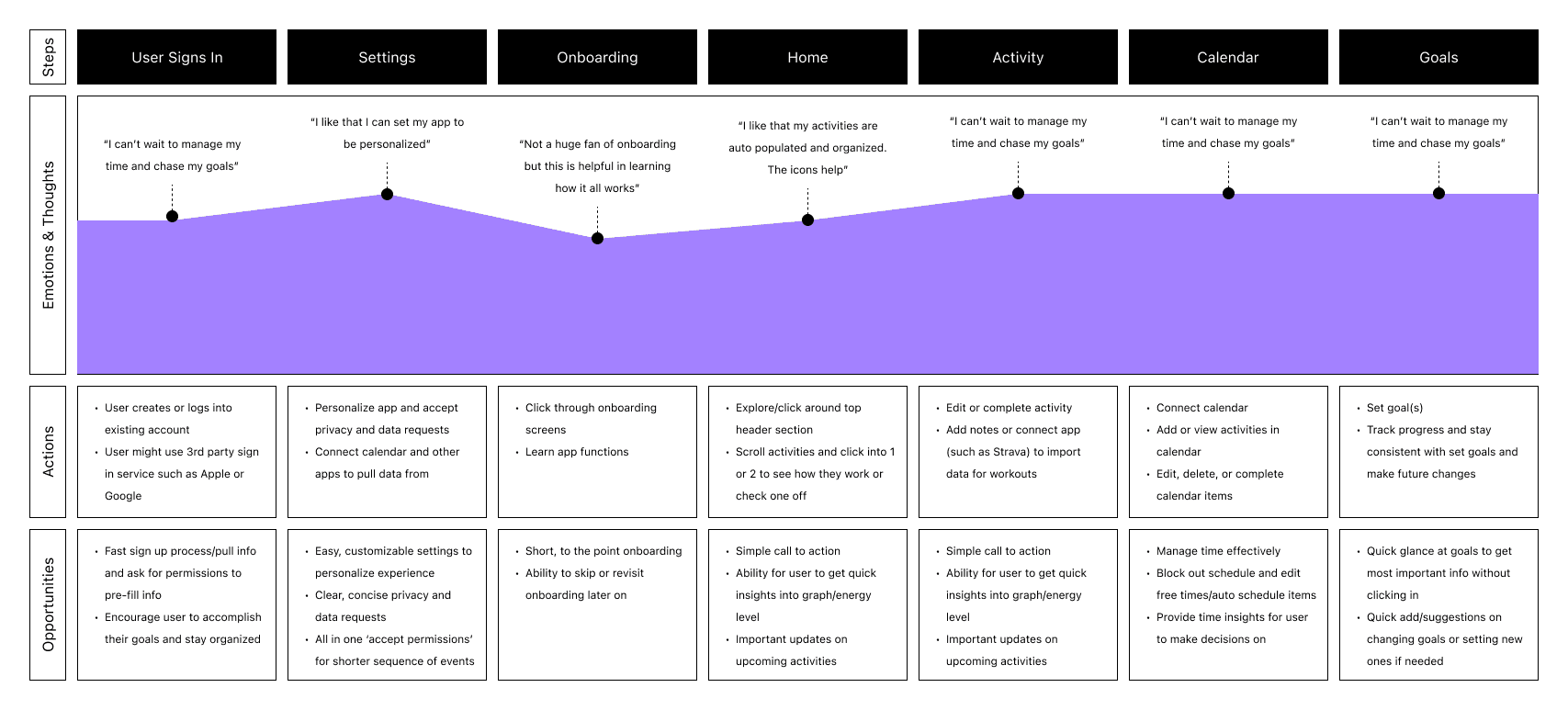
Now that I understood how the target audience interacted with the app and concept as a whole, I created a detailed user journey based on its existing functionality. This involved mapping out every key feature and the steps users would take to accomplish their goals, from onboarding and setting health targets to tracking progress and reviewing insights.
By walking through this flow, I identified areas where users might encounter friction, such as unclear navigation, overwhelming information, or insufficient feedback during critical interactions. These pain points were highlighted within the journey map to show how they could disrupt the user's experience and deter goal achievement.
The journey map served as a guide to refine the flow, prioritize improvements, and ensure a seamless experience that supported users at every step of their health and wellness journey. It also provided a foundation for testing future iterations and aligning the app’s functionality with user expectations.
Now that I understood how the target audience interacted with the app and concept as a whole, I created a detailed user journey based on its existing functionality. This involved mapping out every key feature and the steps users would take to accomplish their goals, from onboarding and setting health targets to tracking progress and reviewing insights.
By walking through this flow, I identified areas where users might encounter friction, such as unclear navigation, overwhelming information, or insufficient feedback during critical interactions. These pain points were highlighted within the journey map to show how they could disrupt the user's experience and deter goal achievement.
The journey map served as a guide to refine the flow, prioritize improvements, and ensure a seamless experience that supported users at every step of their health and wellness journey. It also provided a foundation for testing future iterations and aligning the app’s functionality with user expectations.
Key Features
Users resonated with 4 key features that we based the app around:
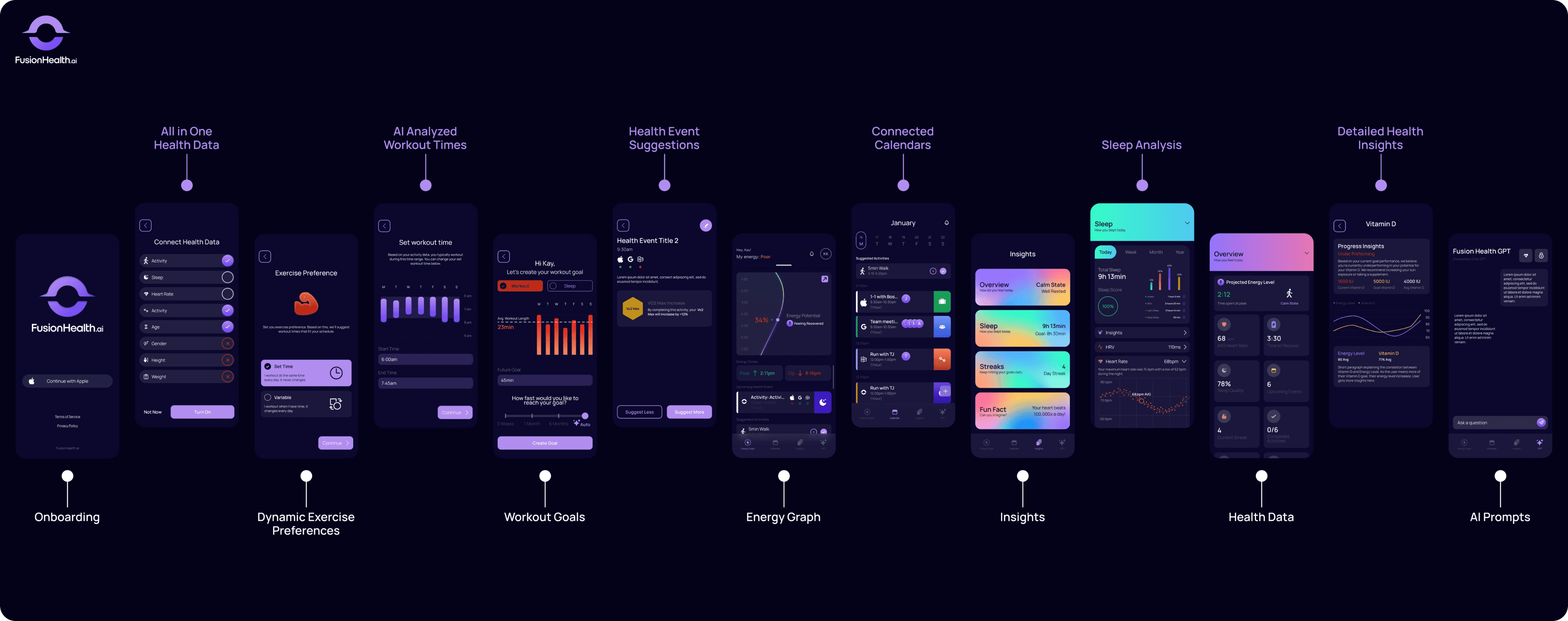
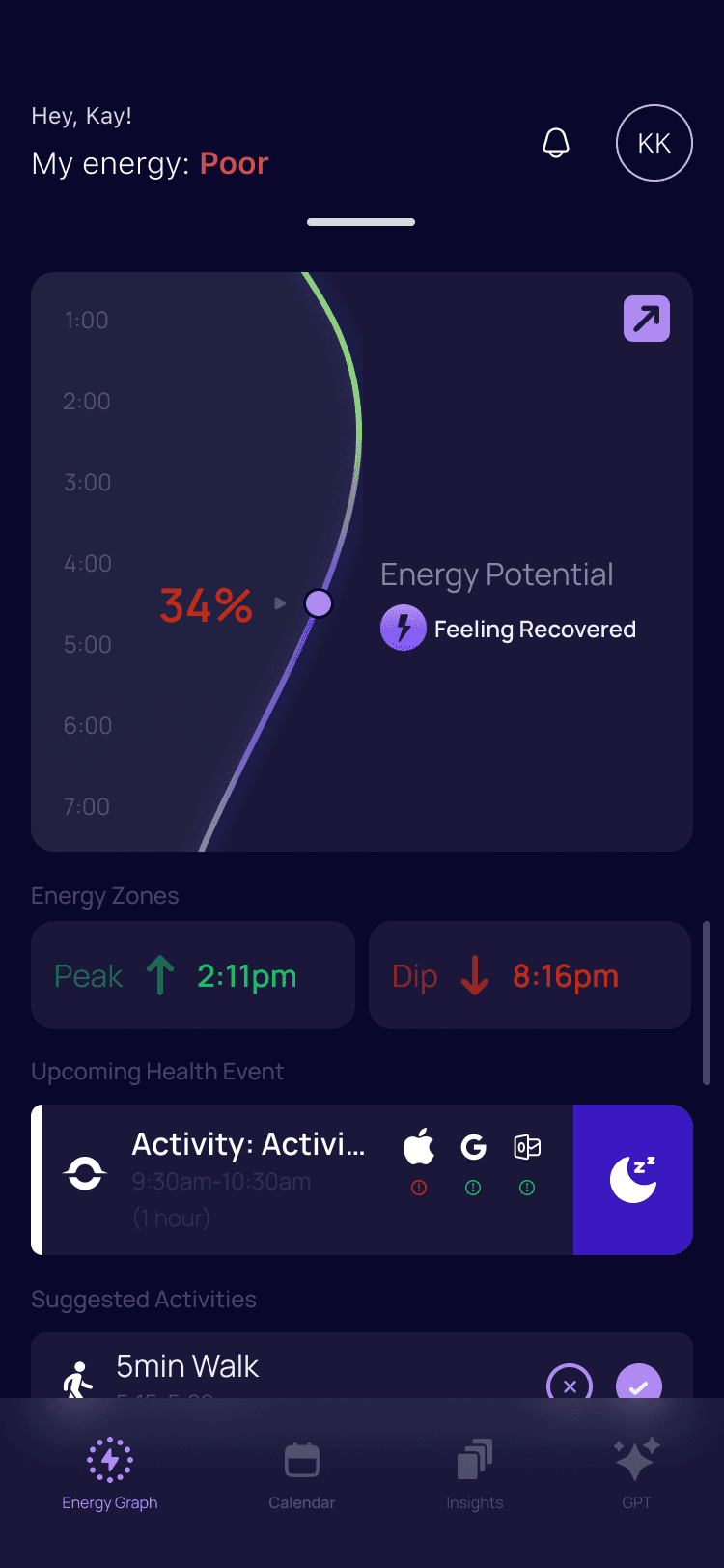
Energy Graph - Being able to see how their energy changes throughout the day in relation to the activities and events they have scheduled in the future.
Calendar Management - Having their calendars all shown in one place with in app suggestions on where they have time to chase after fitness goals.
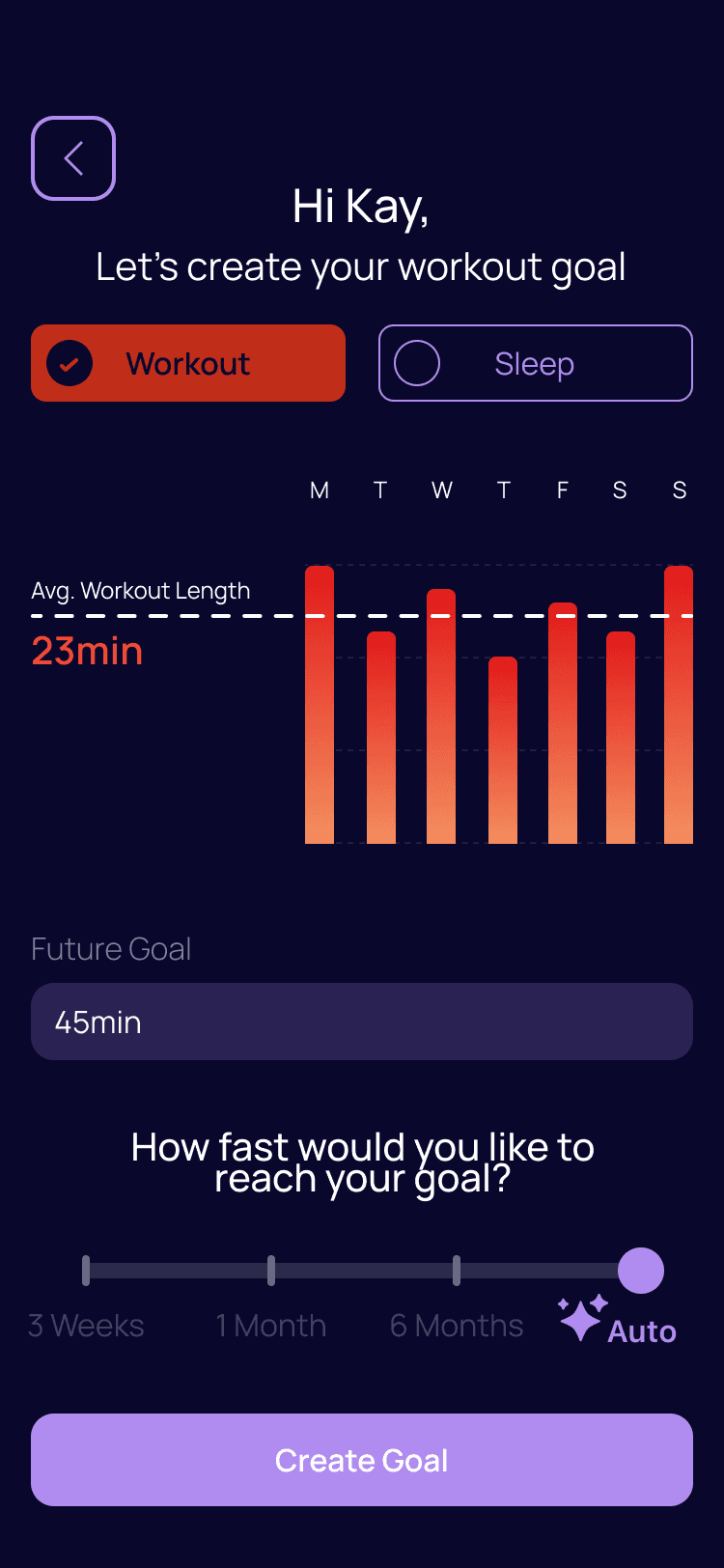
Goal Setting - A way to track and stay focused on their core goals with progress and consistency metrics, and streaks for completing health activities
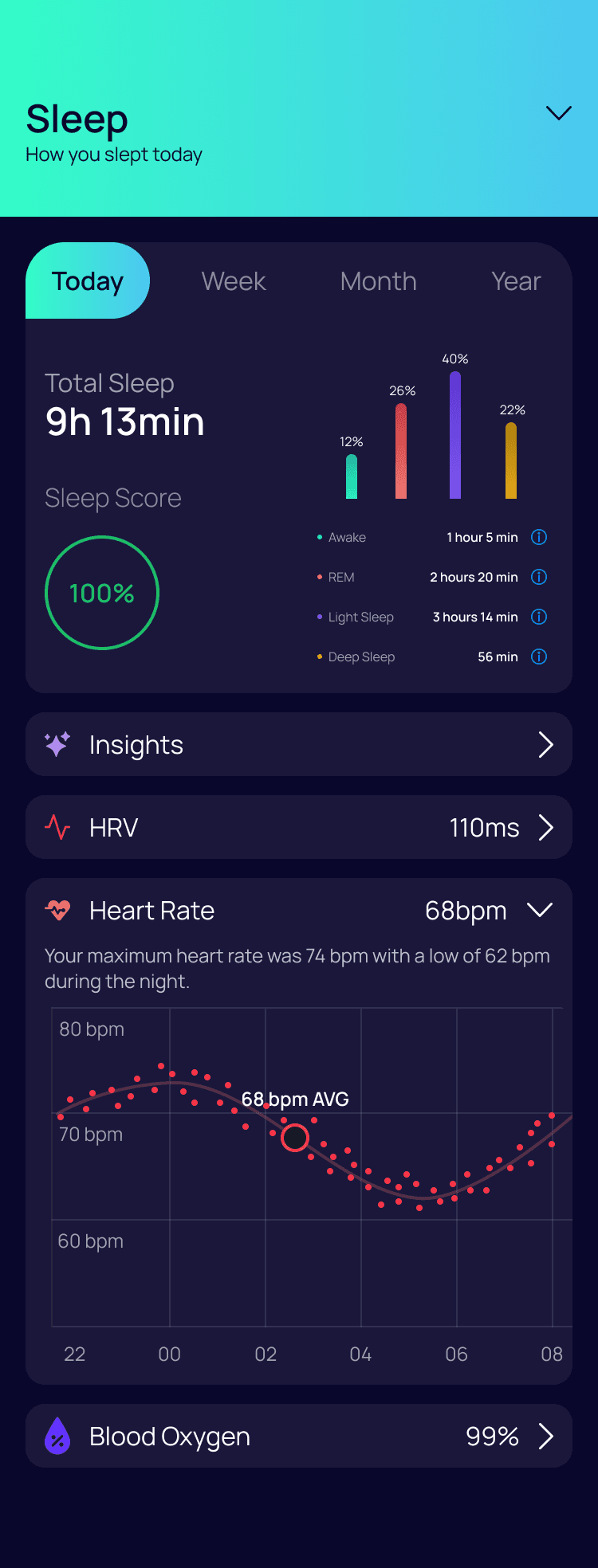
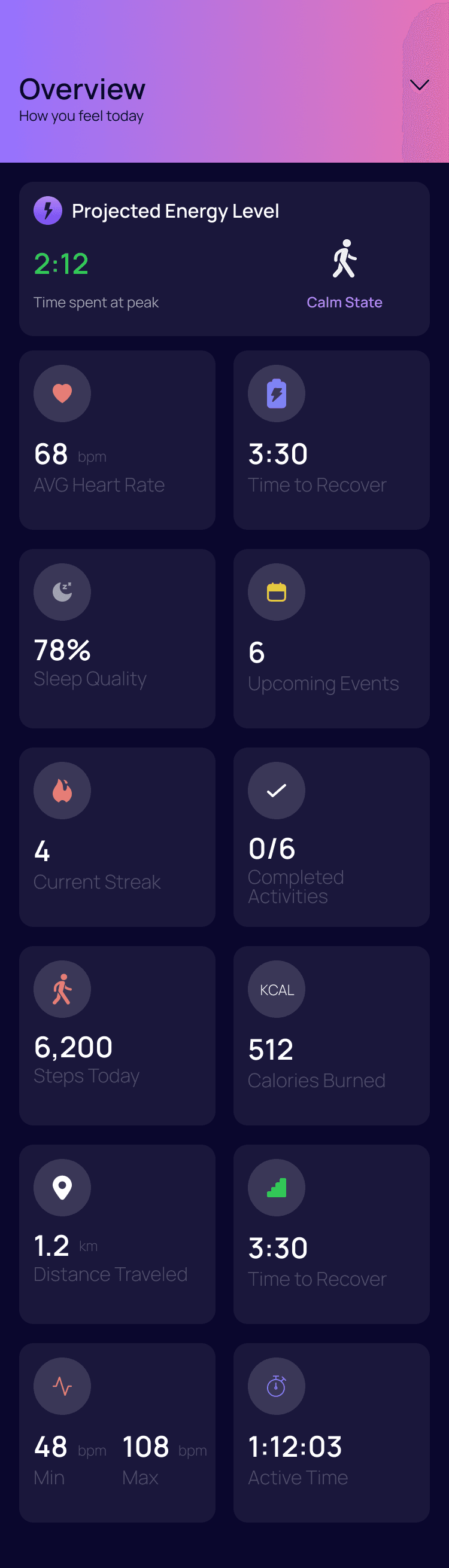
Health Stats - Sleep, steps, heart rate, and virtually every type of data that is related to staying healthy and tracked from an Apple Watch is incorporated with insights and feedback to stay on top.
Users resonated with 4 key features that we based the app around:
Energy Graph - Being able to see how their energy changes throughout the day in relation to the activities and events they have scheduled in the future.
Calendar Management - Having their calendars all shown in one place with in app suggestions on where they have time to chase after fitness goals.
Goal Setting - A way to track and stay focused on their core goals with progress and consistency metrics, and streaks for completing health activities
Health Stats - Sleep, steps, heart rate, and virtually every type of data that is related to staying healthy and tracked from an Apple Watch is incorporated with insights and feedback to stay on top.
Users resonated with 4 key features that we based the app around:
Energy Graph - Being able to see how their energy changes throughout the day in relation to the activities and events they have scheduled in the future.
Calendar Management - Having their calendars all shown in one place with in app suggestions on where they have time to chase after fitness goals.
Goal Setting - A way to track and stay focused on their core goals with progress and consistency metrics, and streaks for completing health activities
Health Stats - Sleep, steps, heart rate, and virtually every type of data that is related to staying healthy and tracked from an Apple Watch is incorporated with insights and feedback to stay on top.
Usability Testing
With a combination of 2 original users from the first design and 5 new users, the new designs were put to the test. After each test, slight changes were made on large pain points, mainly focused around the user flow, style choices, and some core features like the Energy Graph.
With a combination of 2 original users from the first design and 5 new users, the new designs were put to the test. After each test, slight changes were made on large pain points, mainly focused around the user flow, style choices, and some core features like the Energy Graph.
Energy Graph Confusion
The #1 pain point that all 7 users expressed was that the energy graph didn't make sense going from left to right. After further investigating, it was too large and lacked graph marking. In order to fix that, the size was decreased and more insights into health markers were added. Energy information and scheduling was incorporated to make a more useful screen, with the option to expand the graph if they wanted to see more information.
The #1 pain point that all 7 users expressed was that the energy graph didn't make sense going from left to right. After further investigating, it was too large and lacked graph marking. In order to fix that, the size was decreased and more insights into health markers were added. Energy information and scheduling was incorporated to make a more useful screen, with the option to expand the graph if they wanted to see more information.
With a clear understanding of the users' problems in engaging with health and wellness in their day to day, and a good sense of the issues with the first version of the application, I've been able to create an application that more closely meets their needs. This was a redesign of the app that better met the users needs that could be tested to find out how users would interact with it on a daily basis.
With a clear understanding of the users' problems in engaging with health and wellness in their day to day, and a good sense of the issues with the first version of the application, I've been able to create an application that more closely meets their needs. This was a redesign of the app that better met the users needs that could be tested to find out how users would interact with it on a daily basis.
With a clear understanding of the users' problems in engaging with health and wellness in their day to day, and a good sense of the issues with the first version of the application, I've been able to create an application that more closely meets their needs. This was a redesign of the app that better met the users needs that could be tested to find out how users would interact with it on a daily basis.
Sketches
Sketches
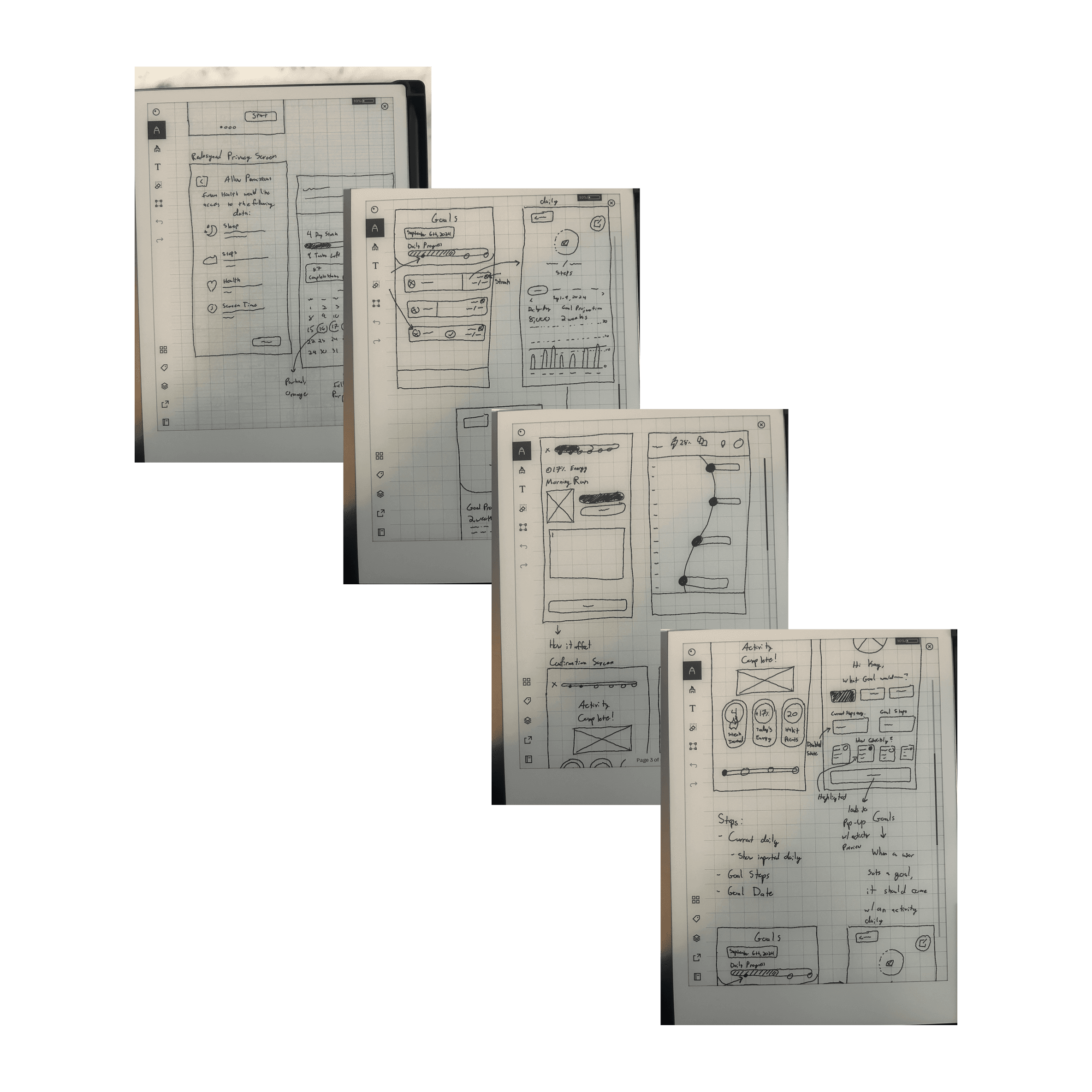
The final step of the process was to sketch out the changes to the functions of the app, and create new ones based on the insights obtained from the research. This meant:
A clear and concise onboarding process
Simplified goals that provided detailed feedback
Activity tracking and calendar management
Future AI functionality to improve goal progress
The final step of the process was to sketch out the changes to the functions of the app, and create new ones based on the insights obtained from the research. This meant:
A clear and concise onboarding process
Simplified goals that provided detailed feedback
Activity tracking and calendar management
Future AI functionality to improve goal progress
The Solution
The Solution
The Solution
Struggle with time management
Struggle with time management
Struggle with time management
*According to user interviews and CDC/WHO health data
*According to user interviews and CDC/WHO health data
Avg. screen time in the US
Avg. screen time in the US
Avg. screen time in the US
Engage in unhealthy behavior
Engage in unhealthy behavior
Engage in unhealthy behavior
Tools


92%
92%
7hrs
7hrs
88%
88%
Question Survey
Question Survey
Question Survey
Reported Usability Issues
Reported Usability Issues
Reported Usability Issues
Users Interviewed & Tested
Users Interviewed & Tested
32
32
93%
93%
93%
16
16
No 01
No 01
Testing the Initial Designs
Testing the Initial Designs
Testing the Initial Designs
No 02
No 02
User Artifacts
User Artifacts
No 03
No 03
Version 1
Version 1
No 04
No 04
No 04
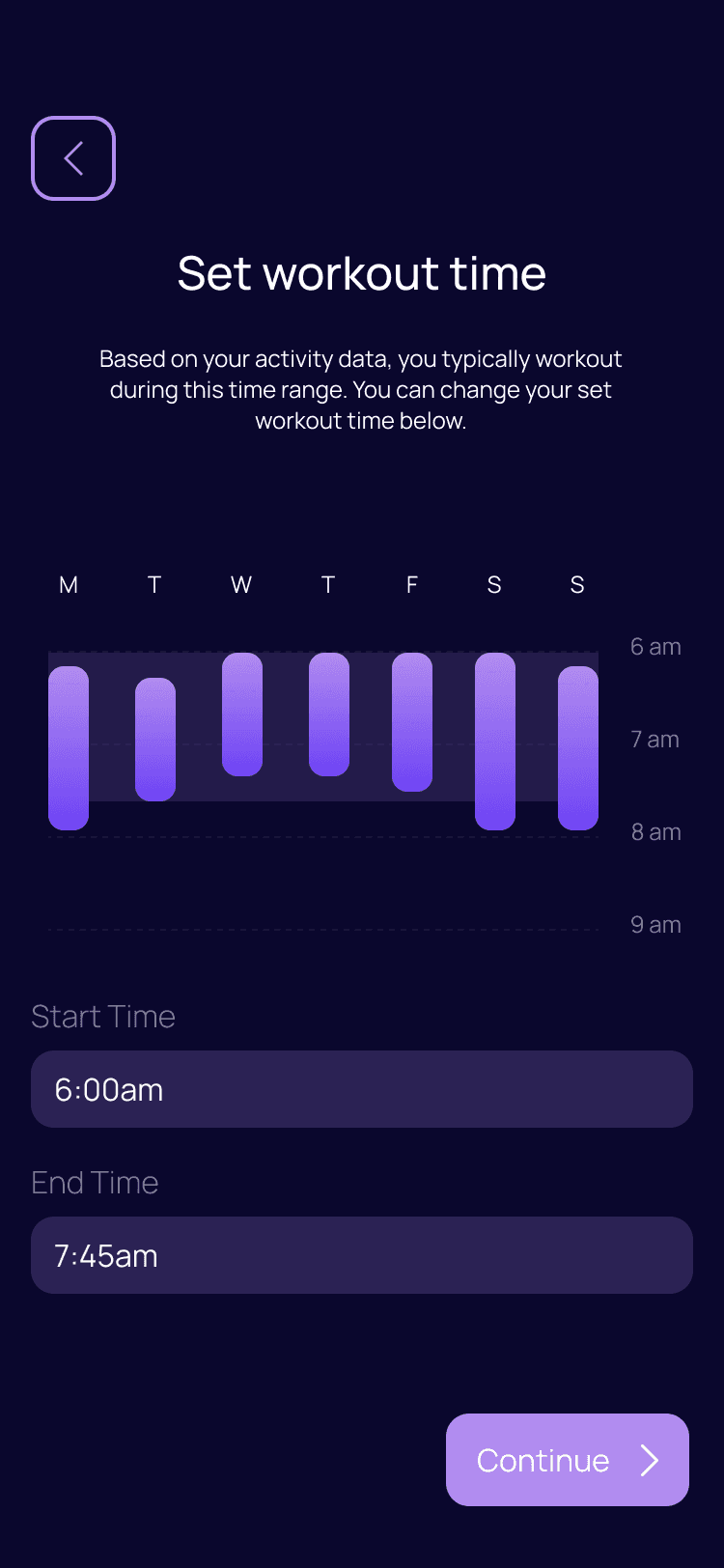
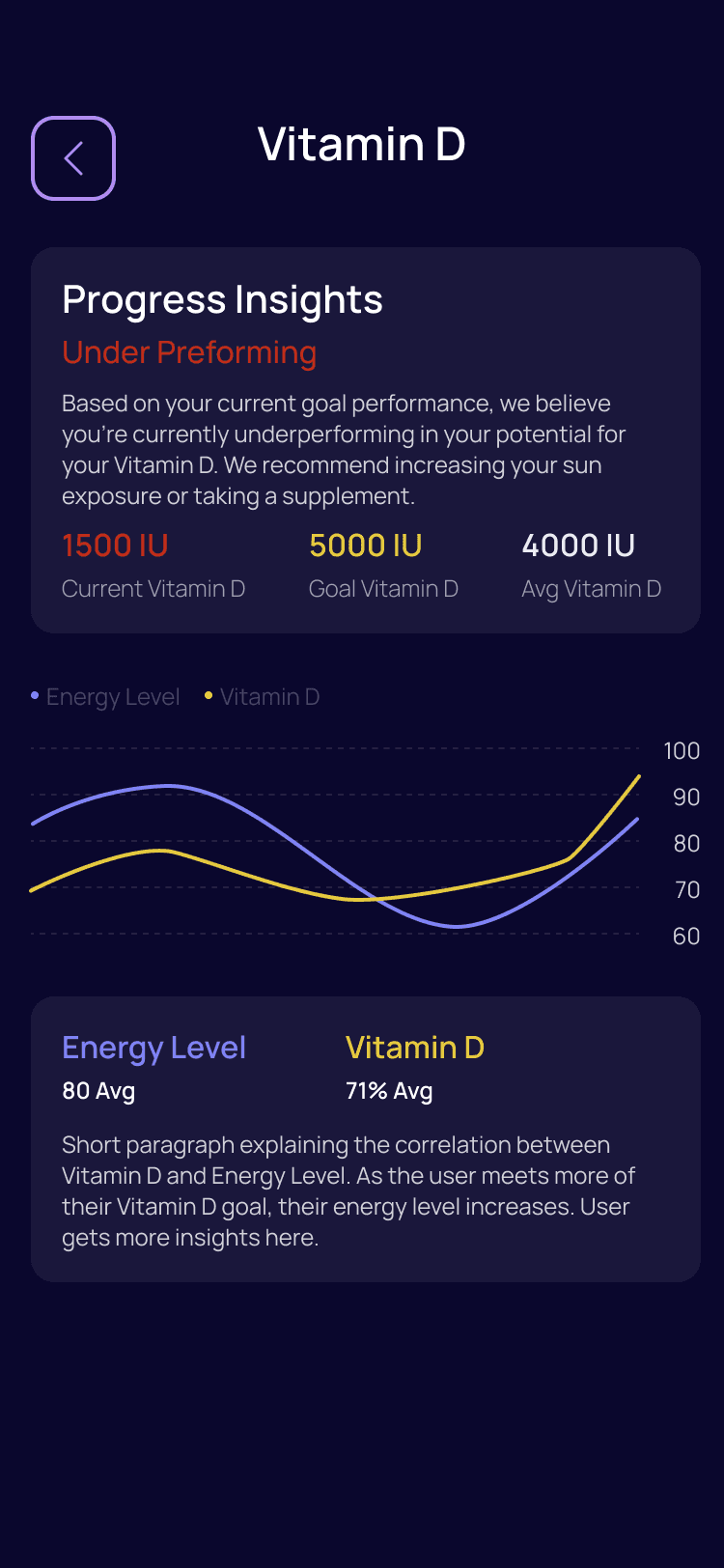
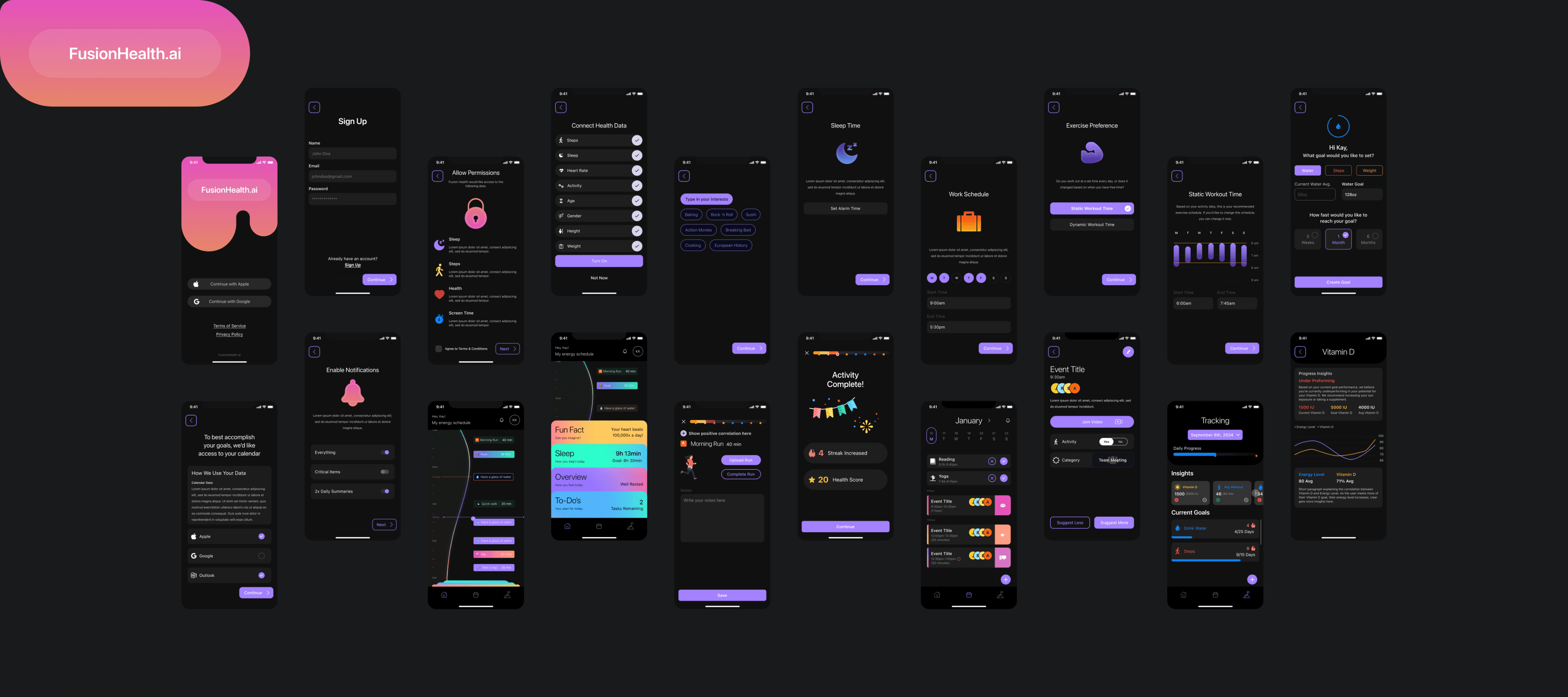
After receiving and incorporating feedback, along with the finalization of the branding guidelines, the final version of the app was put together. Initial user feedback has been overwhelmingly positive, with all previous pain points addressed and users excited to use the real thing. Development is ongoing, and I'm currently leading the charge to get the app on market and improving people's lives by the end of 2025.
After receiving and incorporating feedback, along with the finalization of the branding guidelines, the final version of the app was put together. Initial user feedback has been overwhelmingly positive, with all previous pain points addressed and users excited to use the real thing. Development is ongoing, and I'm currently leading the charge to get the app on market and improving people's lives by the end of 2025.
Version 2.0
Version 2.0
No 05
No 05
Tom, 34 - User from original testing group
Tom, 34 - User from original testing group
"The app looks great! But does it solve the problem?"
"The app looks great! But does it solve the problem?"
"The app looks great! But does it solve the problem?"
Role
Lead Designer
Disciplines
Research, UX/UI, Design Systems, Graphics


Now that I understood how the target audience interacted with the app and concept as a whole, I created a detailed user journey based on its existing functionality. This involved mapping out every key feature and the steps users would take to accomplish their goals, from onboarding and setting health targets to tracking progress and reviewing insights.
By walking through this flow, I identified areas where users might encounter friction, such as unclear navigation, overwhelming information, or insufficient feedback during critical interactions. These pain points were highlighted within the journey map to show how they could disrupt the user's experience and deter goal achievement.
The journey map served as a guide to refine the flow, prioritize improvements, and ensure a seamless experience that supported users at every step of their health and wellness journey. It also provided a foundation for testing future iterations and aligning the app’s functionality with user expectations.
Let's Build Together


Let's Build Together
Let's Build Together
Let's Build Together
The final step of the process was to sketch out the changes to the functions of the app, and create new ones based on the insights obtained from the research. This meant:
A clear and concise onboarding process
Simplified goals that provided detailed feedback
Activity tracking and calendar management
Future AI functionality to improve goal progress
After receiving and incorporating feedback, along with the finalization of the branding guidelines, the final version of the app was put together. Initial user feedback has been overwhelmingly positive, with all previous pain points addressed and users excited to use the real thing. Development is ongoing, and I'm currently leading the charge to get the app on market and improving people's lives by the end of 2025.
With a combination of 2 original users from the first design and 5 new users, the new designs were put to the test. After each test, slight changes were made on large pain points, mainly focused around the user flow, style choices, and some core features like the Energy Graph.
The #1 pain point that all 7 users expressed was that the energy graph didn't make sense going from left to right. After further investigating, it was too large and lacked graph marking. In order to fix that, the size was decreased and more insights into health markers were added. Energy information and scheduling was incorporated to make a more useful screen, with the option to expand the graph if they wanted to see more information.
FusioniHealth.ai
Users Interviewed & Tested
The #1 most common reason that people fall behind on their fitness goals and taking care of themselves is that they get 'too busy'.